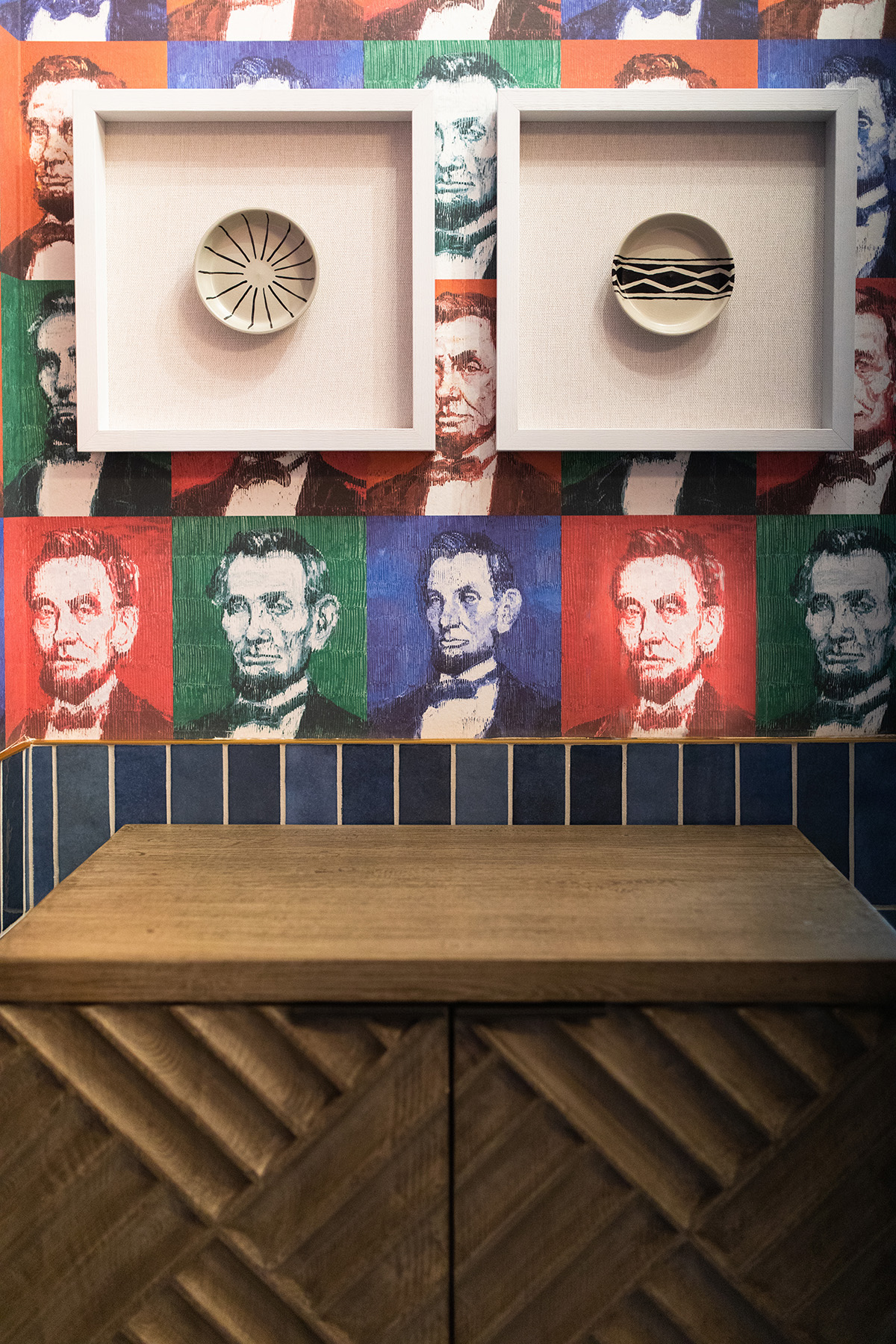
Those feelings aren’t coincidental. They’re by design. The calm you feel in a softly lit living room, the focus that sharpens at a well-proportioned desk, the way natural textures make a space feel grounded—those responses are intentional. And they’re at the core of what the design industry calls “neuroaesthetics.” It’s a big word for something we’ve all felt before.
But now we have a name—and the science—to back it up.
A recent article from ArchiExpo’s been making the rounds in the design world. The premise? Spaces impact our brains, moods, and behaviors. Light that softens the edge of a long day, textures that invite you to slow down and connect, proportions that make a room feel balanced instead of overwhelming: they all quietly shape how we think, feel, and function.
Sounds reasonable. But if you’ve been in the industry long enough—like we have—it’s not exactly a shocker. Like every good designer, we’ve always known spaces affect people, and now we have the science to prove what so many good designers have always practiced.
For years, we’ve designed for how a space feels, not just how it looks. From materials that feel inviting and tactile instead of cold and sterile to layered lighting that shifts with the time of day, every choice is made with the human experience in mind.
We’ve watched clients walk into a room and exhale. We love when the tension leaves their shoulders under soft lighting, and they sink into warm-colored materials. When the layouts we select make sense for how they actually live, it’s magic.
When a kitchen flows naturally during a busy morning, or a living space invites conversation without effort, that’s when design starts to feel effortless. Clients don’t always ask for that directly, but the feeling is undeniable when it’s there.
Designing for human experience is an instinct, not a trend. Every designer who’s studied their history knows it was the standard. Beauty. Intention. Experience. These are the guiding principles central to how we engage with a space.
Now we’re paying for cutting the human experience out of design, instead of building around it. Burnout. Disengagement. Environments that drain instead of restore.
It’s not just a theory or tagline, it’s how we’ve operated from day one.
So what does neuroaesthetics mean for how we work at Crimson?
Science confirms what our team practices every day and how we approach each individual project. Design is, in fact, a biological intervention. Light does modulate cortisol. Materials affect stress. Spatial layout shapes how people connect.
Every detail matters when every space is shaped with intention. It’s the difference between a room that looks finished and one that actually feels right the moment you step into it.
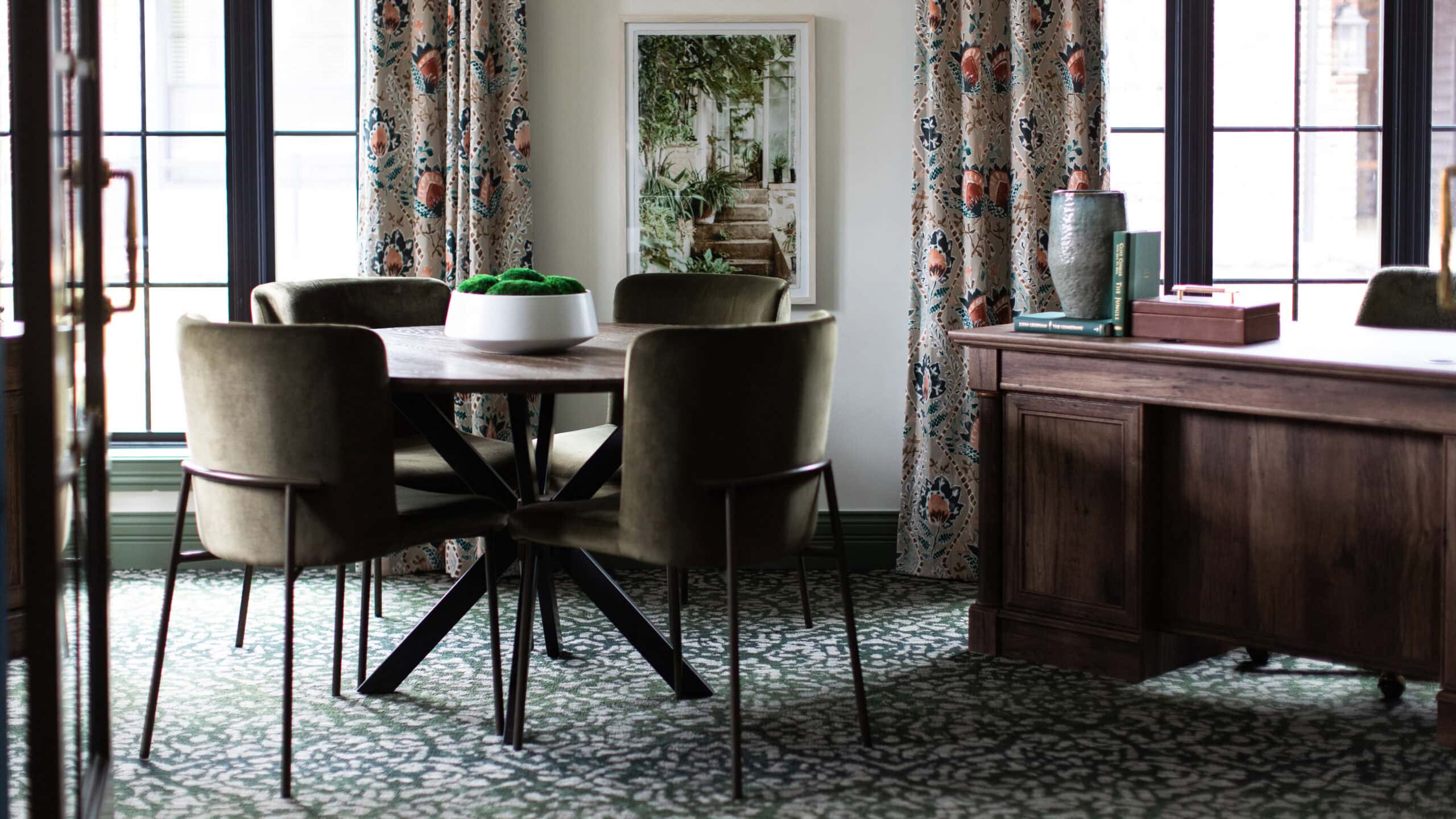
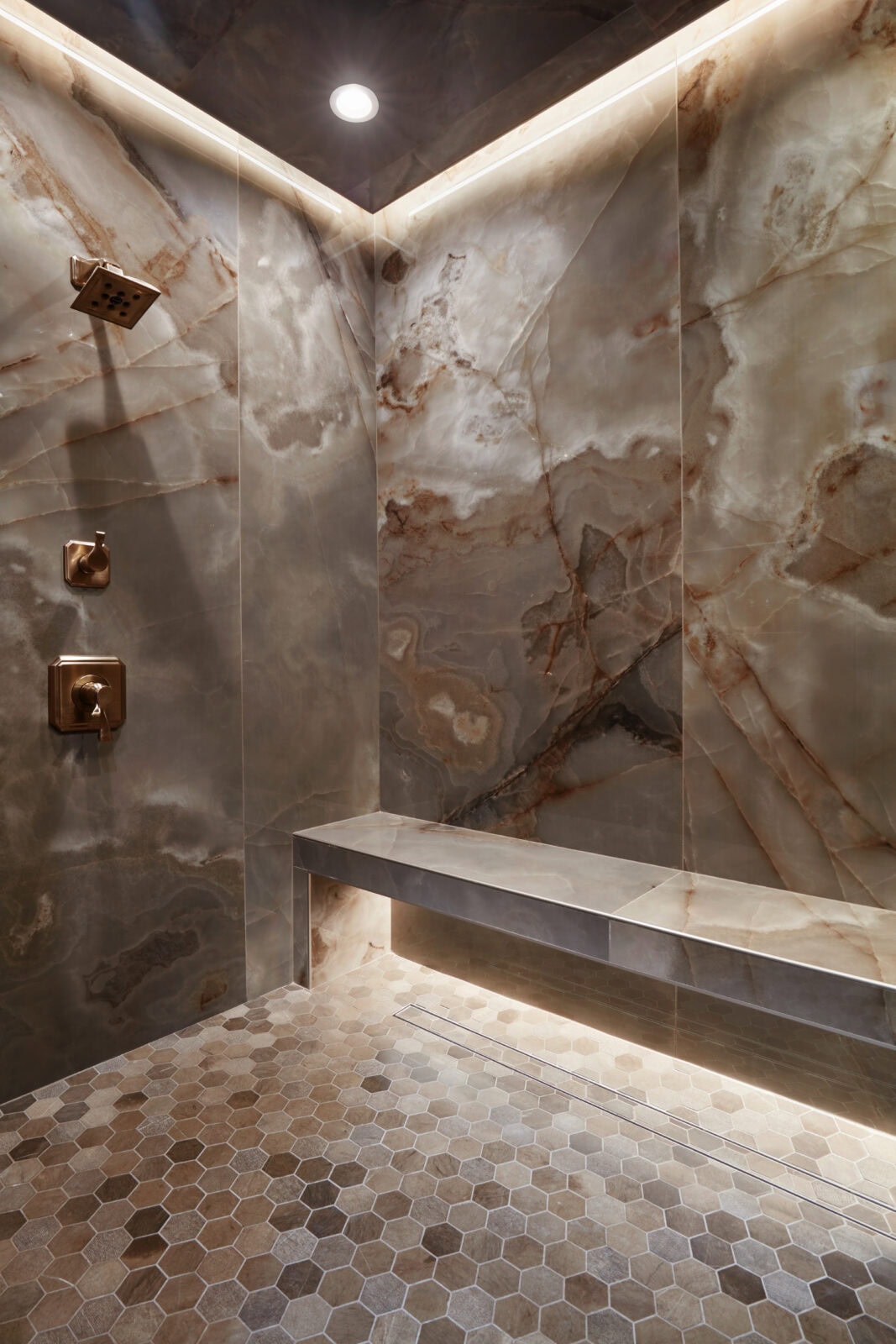
That’s not abstract, that’s a boardroom that fosters creativity—before the meeting even starts. That’s a home office that finally feels empowering, even if you can’t explain why. That’s a primary bathroom that feels like a spa retreat every time you step in the shower.
What neuroaesthetics means for our clients
The article argues that design is no longer the backdrop for wellness, but rather the intervention. Now there’s a framework capable of pushing the entire industry in a different direction.
At Crimson Design Group, this framework isn’t just theory, it’s how we’ve always designed. Spaces that restore energy, support focus, and create a sense of ease aren’t optional—they are the standard.
For a recent client’s kitchen redesign, we paired natural wood tones and marble-inspired quartz with layered ambient lighting to create a space that’s both inviting and durable enough to support daily life with children.
We love seeing this get the attention and validation it deserves. Design has always been the intervention; we’ve only rediscovered what we abandoned.
Through intentional design, Crimson creates spaces where you feel it immediately: the exhale when you walk in, the sense of calm, the quiet energy that stays with you. It’s not a new way of designing. It’s a return to what design was always meant to do.